Guide to Nonprofit Status Verification for Donors
Donating to a charity? Make sure it’s legitimate first. Verifying a nonprofit's status protects your tax deductions, ensures your money supports a valid cause, and shields you from potential scams. Here's what you need to know:
- Why verify? Donations are only tax-deductible if the nonprofit is an IRS-approved 501(c)(3). Scammers and revoked organizations can cost you both money and deductions.
- How to verify: Use the IRS Tax Exempt Organization Search (TEOS) to check eligibility, revocation status, and deduction limits.
- Additional tools: Platforms like Charity Navigator, Candid, and BBB Wise Giving Alliance provide extra insights into a nonprofit's financial health and transparency.
- Documentation matters: Always keep receipts, acknowledgments, and other required records to claim deductions.
Taking a few minutes to verify can save you trouble later. Keep reading for step-by-step guidance and tools to make the process easier.
How Donors Verify 501(c)(3) Status: TEOS, Determination Letters & Databases
sbb-itb-e723420
Why Donors Should Verify Nonprofit Status
Making sure a nonprofit is legitimate before donating is a smart way to protect both your finances and your tax benefits. Skipping this step can leave you vulnerable to financial fraud, identity theft, and losing out on tax deductions. Beyond losing money, you might also unknowingly share sensitive personal information with scammers.
Risks of Donating to Unverified Organizations
One of the biggest risks is losing your tax deduction. Donations are only tax-deductible if they go to IRS-approved 501(c)(3) charities. If you contribute to an unverified group, the IRS won’t allow the deduction, which could mean a smaller refund or a larger tax bill [4][7].
Financial fraud is another major concern. After Hurricanes Milton and Helene in October 2024, the IRS warned about scammers creating fake charities to exploit donors. As IRS Commissioner Danny Werfel explained:
"When fake charities scam unsuspecting donors, the proceeds don't go to those who need the help and those contributing to these fake charities can't deduct their donations on their tax return" [4].
Instead of helping those in need, your money could end up in the hands of criminals.
Scammers also use identity theft tactics, posing as charities to collect Social Security numbers, credit card details, and banking information [4][7]. Be especially cautious of requests for immediate payment through non-traceable methods - these are often red flags.
Understanding these risks highlights why verifying a nonprofit’s status is so important. It’s not just about protecting your money - it’s about keeping your personal information safe and ensuring your tax benefits remain intact.
Benefits of Verifying Nonprofit Status
The most obvious advantage of verification is protecting your tax deductions. For the 2025 tax year, the standard deduction is $15,750 for single filers and $31,500 for joint filers [6]. Beginning in 2026, even those who don’t itemize can deduct up to $1,000 (single) or $2,000 (married filing jointly) for cash donations to 501(c)(3) organizations [6]. If you do itemize, you can deduct cash contributions up to 60% of your adjusted gross income [6]. Verifying the nonprofit ensures you can take full advantage of these benefits.
Another perk is financial transparency. By checking a nonprofit’s Form 990, you can see how it allocates its funds - whether most of it goes to programs or if a large chunk is spent on executive salaries and fundraising fees [5]. Any tax-exempt organization with annual receipts over $50,000 must file this form with the IRS [5], giving you a clear picture of their financial priorities.
Lastly, mission verification ensures the nonprofit aligns with your values. Some organizations may misuse funds or fail to live up to their public promises. Verifying their status and researching their operations help you avoid supporting groups that don’t deliver on their commitments [5]. This way, your donation goes to causes that genuinely reflect your priorities and make a difference.
Understanding 501(c)(3) Status and Tax Deductions
What is 501(c)(3) Status?
Knowing whether a charity meets 501(c)(3) criteria is key to protecting your tax benefits and ensuring your donation goes to a legitimate cause.
Section 501(c)(3) of the Internal Revenue Code (Title 26) grants tax-exempt status to organizations focused on religious, charitable, scientific, literary, or educational purposes [9][10]. Among the many types of 501(c) organizations in the U.S., 501(c)(3) is the one tied to charitable tax deductions [9][10].
To qualify, an organization must pass two specific tests: its governing documents must strictly limit its purpose to charitable activities, and its assets must be permanently dedicated to such use. Additionally, its operations must exclusively serve exempt purposes and cannot benefit private individuals [2][9].
Political activities are strictly off-limits - violating this rule results in permanent disqualification from 501(c)(3) status [9]. While lobbying is allowed, it’s heavily restricted.
How 501(c)(3) Status Affects Tax Deductions
Only donations to 501(c)(3) organizations are tax-deductible. Contributions made to other nonprofit types, such as 501(c)(4) social welfare groups or 501(c)(6) business leagues, don’t qualify for tax deductions [10]. This distinction is important for donors aiming to maximize their tax savings.
Starting in 2026, under the One Big Beautiful Bill Act, standard deduction filers can claim up to $1,000 (or $2,000 for joint filers) for cash donations to 501(c)(3) charities. However, this excludes gifts to private foundations and donor-advised funds [10][8]. For those who itemize, deductions apply to contributions exceeding 0.5% of adjusted gross income (AGI), with a cap of 35 cents per donated dollar [10]. If you receive any benefits in return for your donation, you’ll need to subtract the fair market value of those benefits. For donations of $250 or more, a written acknowledgment from the charity is required [3][8].
Before donating, use IRS tools to confirm a charity’s 501(c)(3) status to ensure your contributions remain tax-deductible. It’s a simple step that can save you money while supporting causes you care about.
How to Use IRS Tools to Verify Nonprofit Status
Before donating, it's important to confirm a nonprofit's status using IRS tools. This ensures your donation qualifies for tax benefits and goes to the intended cause.
Step-by-Step: Using the IRS Tax Exempt Organization Search
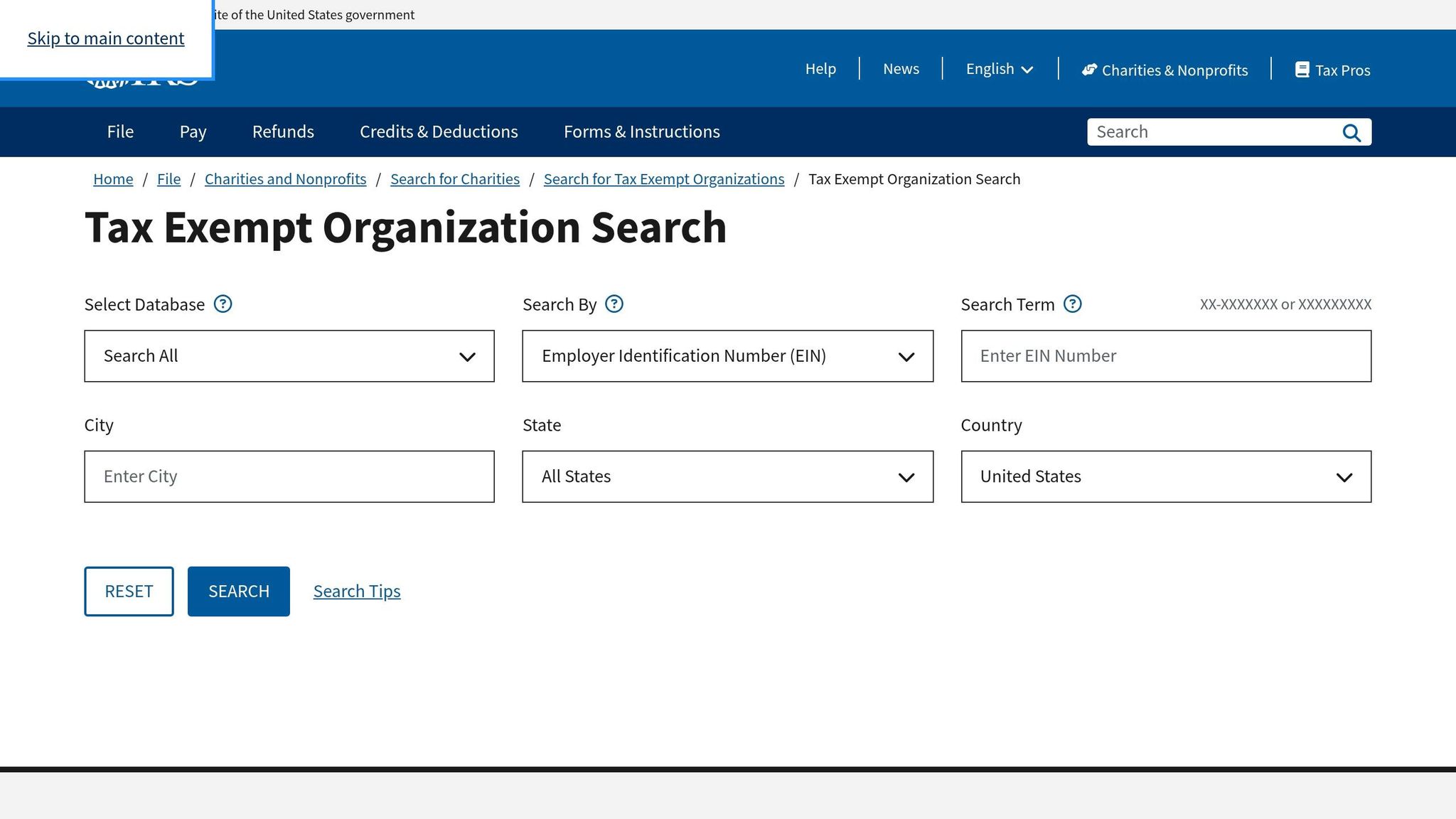
The IRS Tax Exempt Organization Search (TEOS), available at IRS.gov/teos, is a reliable way to check a nonprofit's status [11]. Designed for ease of use on any device, including smartphones and tablets, it allows for quick checks, even while you're on the go.
To use the tool, you can search by:
- Legal name
- Doing Business As (DBA) name
- Nine-digit EIN (Employer Identification Number)
For the most accurate results, use the EIN. If you're searching by name, try using quotation marks or sorting results by city and state to narrow the options.
The TEOS tool also gives access to:
- Form 990 filings
- Determination letters issued since January 2014
- Information on tax-exempt status revocations
Updates are typically made monthly, keeping the data relatively up-to-date.
What to Check in IRS Search Results
Once you've found the organization, review these details:
- Eligibility status: Confirm the nonprofit is active and eligible.
- Revocation status: Check if the tax-exempt status has been revoked.
- Deductibility Status Code: Codes like "PC" (Public Charity), "PF" (Private Foundation), and "GROUP" (group exemption) are key. For example:
- "PC" often allows for cash contribution deductions up to 60%.
- "PF" generally limits deductions to 30%.
For detailed deduction limits, refer to the IRS deduction limit tables. If you're unsure about the information, explore other verification methods.
When the IRS Tool Isn't Enough
Some nonprofits may not appear in the TEOS search. This includes:
- Churches and religious organizations
- Governmental units
- Subordinate entities under group exemptions
If you can't find an organization, try checking the Exempt Organizations Business Master File Extract, which included nearly 1.94 million records as of March 10, 2026 [13].
"Contact a charity directly to ask for written confirmation of its current tax-exempt status or a copy of its tax-exempt determination letter or initial exemption application, which the organization is required to share under the tax code."
- Loeb & Loeb LLP [12]
If you're still unable to verify the status, you can:
- Call the IRS TE/GE Customer Account Services at 877-829-5500
- Submit Form 4506-A for additional documentation.
Third-Party Platforms for Nonprofit Verification
While IRS tools confirm tax-exempt status, they don't assess how well a nonprofit performs in terms of impact or financial efficiency. This is where third-party platforms step in, offering insights into a charity's financial health, transparency, and results - areas the IRS doesn't cover. Unlike IRS data, which can be outdated by up to two years, these platforms provide almost real-time information [5][17]. Together with IRS tools, they give a fuller picture of a nonprofit's overall performance.
Charity Navigator
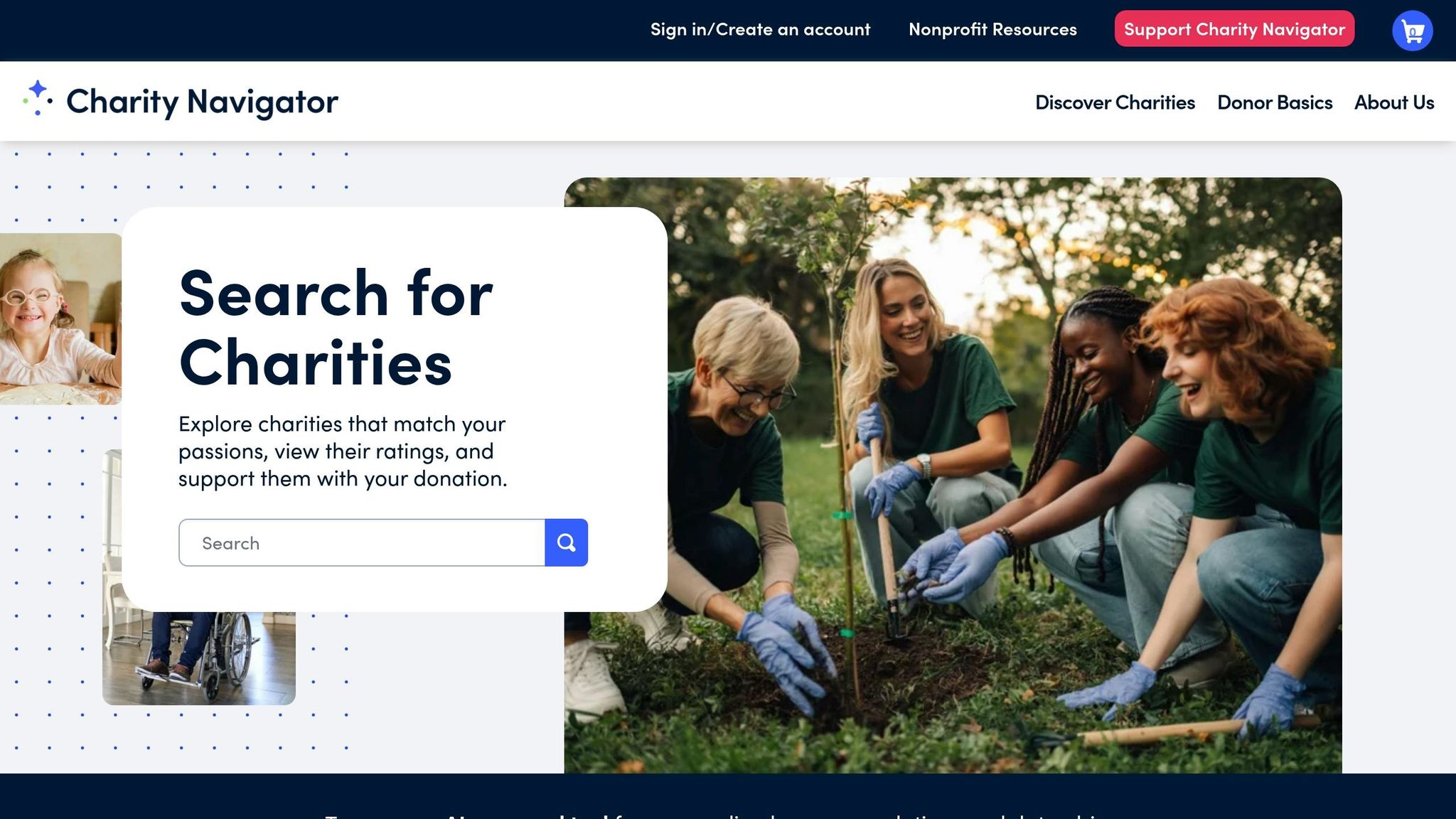
Charity Navigator has evaluated over 245,000 charities and is used by more than 8 million people each year [14]. Its Encompass Rating System scores nonprofits across four key areas: Impact & Measurement, Accountability & Finance, Leadership & Adaptability, and Culture & Community [15]. Each category is scored from 0 to 100, and these scores combine into an overall star rating ranging from zero to four stars. A four-star rating (90+ score) signals adherence to best practices, while charities scoring below 50 receive zero stars [15].
This platform goes beyond financial metrics, assessing program effectiveness and confirming if nonprofits publicly share essential documents like Form 990 and board member lists - data not tracked by the IRS [18].
"Our team develops ratings that are both analytical and responsive to the data needs of our site users." - Charity Navigator [15]
Charity Navigator's resources are free for donors, including a "Giving Basket" feature that lets users donate to multiple verified charities in a single transaction while keeping their personal information private. Over $338 million has been donated through this tool [14].
Candid/GuideStar
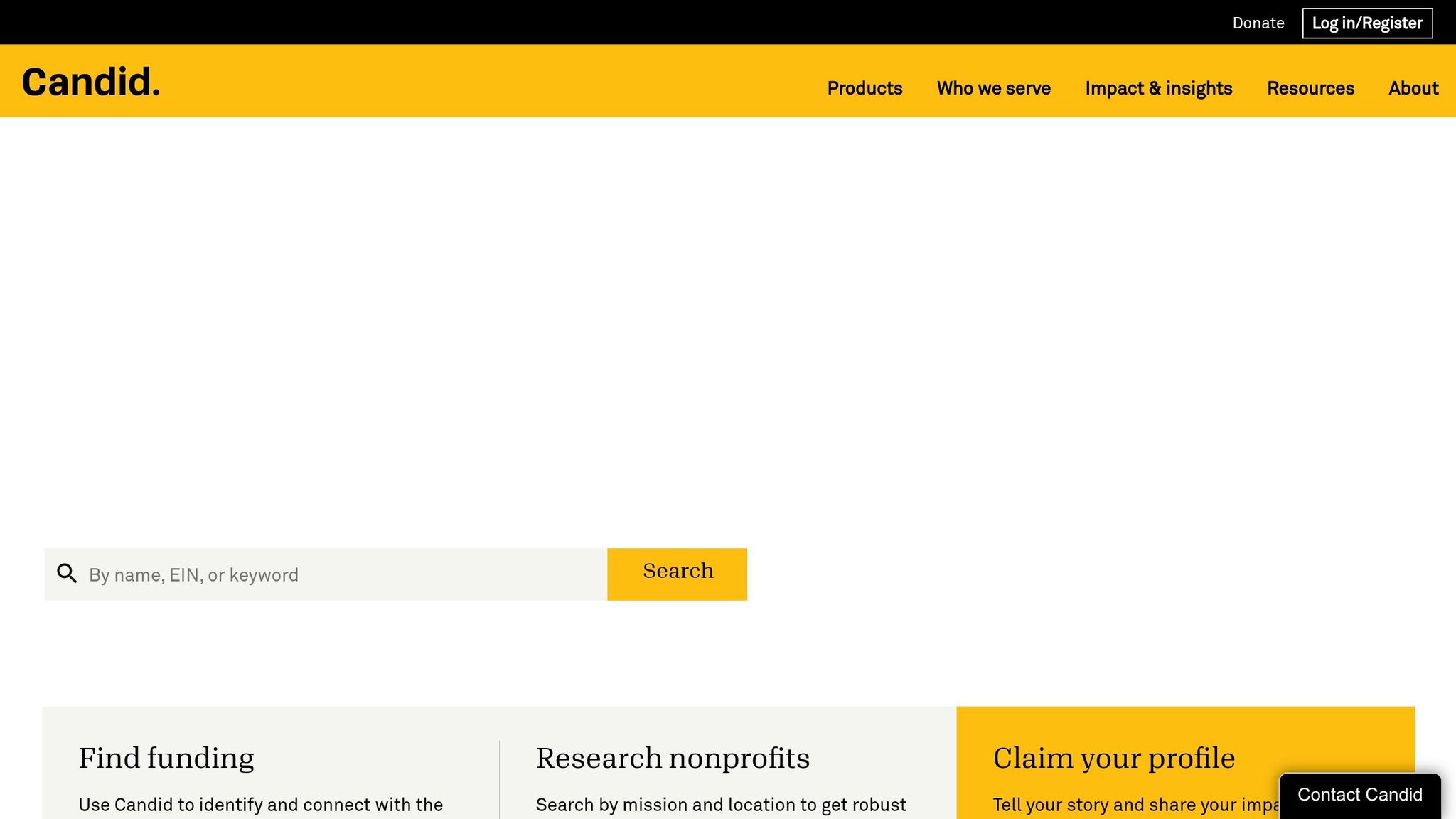
Candid, previously known as GuideStar, maintains profiles for more than 1.9 million organizations and tracks roughly $180 billion in annual grant funding [17]. Nonprofits can create detailed profiles that include their mission, programs, and leadership details. Basic access is free with registration, offering a personalized dashboard and nonprofit profiles [19].
Candid awards Seals of Transparency - Bronze, Silver, Gold, and Platinum - based on how much information a nonprofit voluntarily shares beyond legal requirements. A Gold or Platinum seal indicates a high level of disclosure about operations and outcomes [16].
This platform is especially useful for researching faith-based organizations, which are often exempt from filing Form 990 with the IRS. Candid provides data on thousands of these nonprofits, filling a critical gap in IRS records [16].
"Nonprofit profiles help the sector take a leap forward from data and information about charities to powerful knowledge and insight to help us make informed decisions." - Candid [16]
BBB Wise Giving Alliance
The BBB Wise Giving Alliance builds on IRS verifications by focusing on ethical standards and operational transparency. It evaluates nonprofits against specific accountability benchmarks, ensuring they meet best practices in areas like fundraising, governance, and reporting [5]. Unlike platforms that use star or seal systems, BBB emphasizes whether organizations meet its established standards for ethical and transparent management.
This platform is free and particularly helpful for verifying if a nonprofit operates according to recognized industry standards, offering donors confidence not just in legitimacy but also in operational integrity.
While all three platforms provide free basic access for donors, Candid also offers advanced features through paid subscriptions, starting at $3,499 per year, which include unlimited Form 990 downloads and deeper data insights [19].
Requesting Documents Directly from Nonprofits
When IRS tools or third-party platforms fall short, reaching out to the nonprofit directly for official documents can provide clarity. This step not only helps confirm the legitimacy of the organization but also safeguards your tax benefits. Federal law requires tax-exempt organizations to share specific records upon request [22][25]. By directly requesting these documents, you gain access to the most reliable proof of the nonprofit's status and financial practices, complementing other verification methods.
IRS Determination Letters
The IRS determination letter is an official document that confirms an organization’s tax-exempt status under a specific section of the Internal Revenue Code, such as 501(c)(3) [21]. This letter is essential because it verifies that contributions to the organization are tax-deductible. Additionally, it includes the effective date of exemption, which is critical since donations made before this date typically won't qualify for deductions. The letter also specifies whether the group is classified as a public charity or a private foundation, which impacts deduction limits [20].
"The 501(c)(3) determination letter is proof of your organization's tax-exempt status." - Christine Mathias, Attorney, Nolo [20]
If a nonprofit hesitates or refuses to provide this letter, it’s a red flag and a breach of IRS disclosure rules [22]. For organizations approved after January 1, 2014, you can often download the letter using the IRS Tax Exempt Organization Search (TEOS) tool [24]. If the organization has undergone a name or address change, an affirmation letter may be necessary to confirm its current status [20][26].
Form 990 and Financial Records
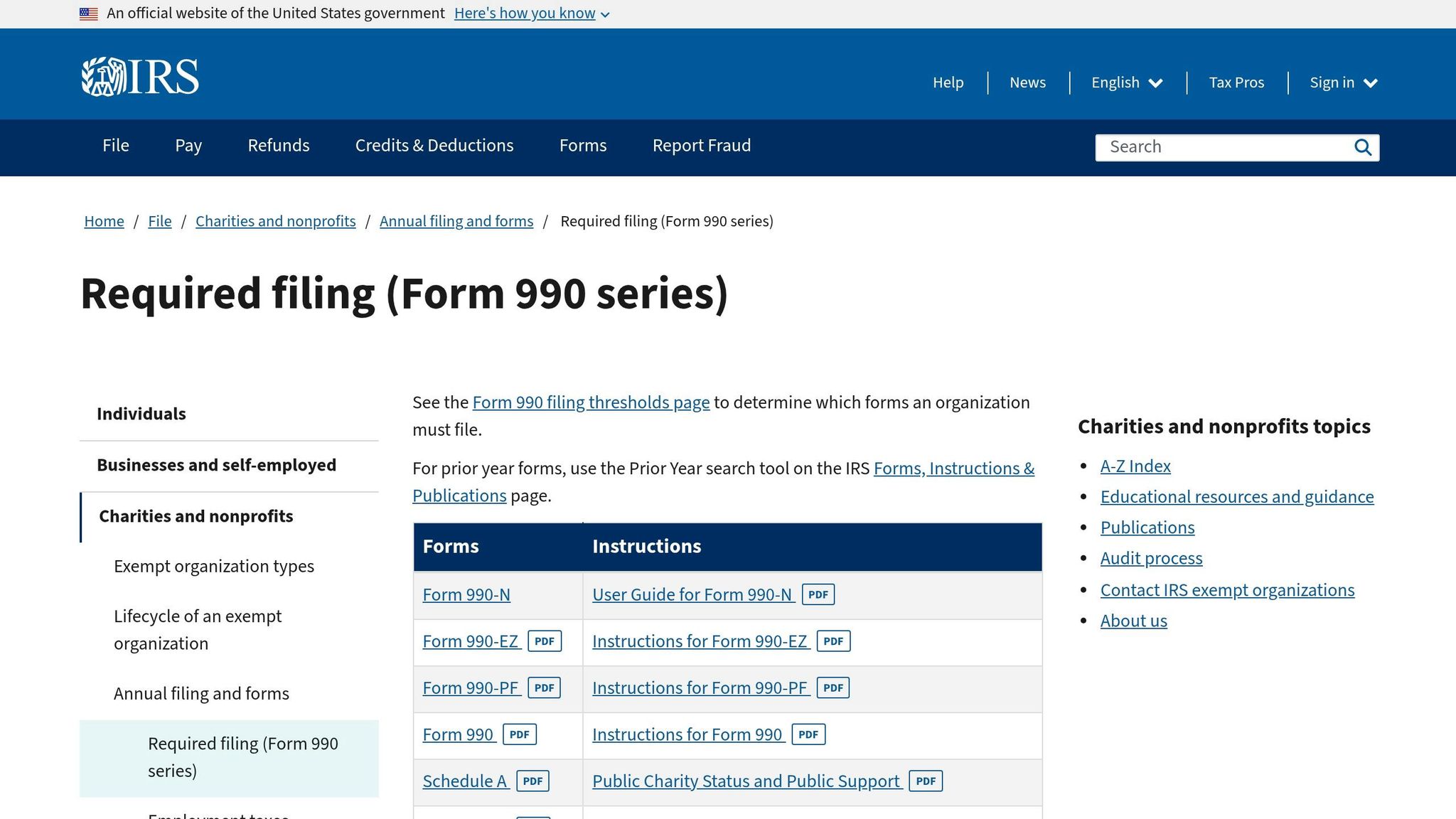
In addition to the determination letter, financial records like Form 990 are key for transparency. Tax-exempt organizations are required to provide their annual returns (Forms 990, 990-EZ, 990-PF, or 990-T) and their original exemption application (Form 1023 or 1024) upon request [23][25]. These documents must be available for the three years following their filing or due date [23]. You can request copies in person for immediate access or in writing, with a 30-day window for a response [25].
Form 990 offers insights into an organization’s financial health, including executive pay, program expenses, and whether they meet public support tests - an indicator of funding diversity [2]. For nonprofits that filed with the IRS in 2017 or later, these forms are accessible through TEOS [24]. If a nonprofit refuses to share these records, you can submit Form 4506-A to the IRS to request them directly [24]. Keep in mind, organizations may charge a reasonable fee to cover copying or mailing costs [25].
Group Exemption Letters and Affirmation Letters
Some local chapters operate under a group exemption letter rather than holding their own IRS ruling. If a local branch isn't listed in the IRS database, ask the parent organization to confirm that the branch is covered under its group exemption [26]. The central organization should provide both the group exemption letter and written confirmation that the chapter is in good standing [2].
"If you are a subordinate organization under a group exemption ruling, contact the central organization that holds the group ruling to obtain confirmation of your status as a member of the group." - Internal Revenue Service [26]
For nonprofits that applied for exempt status within 27 months of incorporation, their exemption - and your tax-deductibility - can be retroactive to their incorporation date [20]. For pre-2014 determinations, use Form 4506-B to request a copy [26]. If the IRS doesn’t respond within 60 days, you can follow up by calling Customer Service at 877-829-5500 [26].
Tracking Donations for Tax Compliance
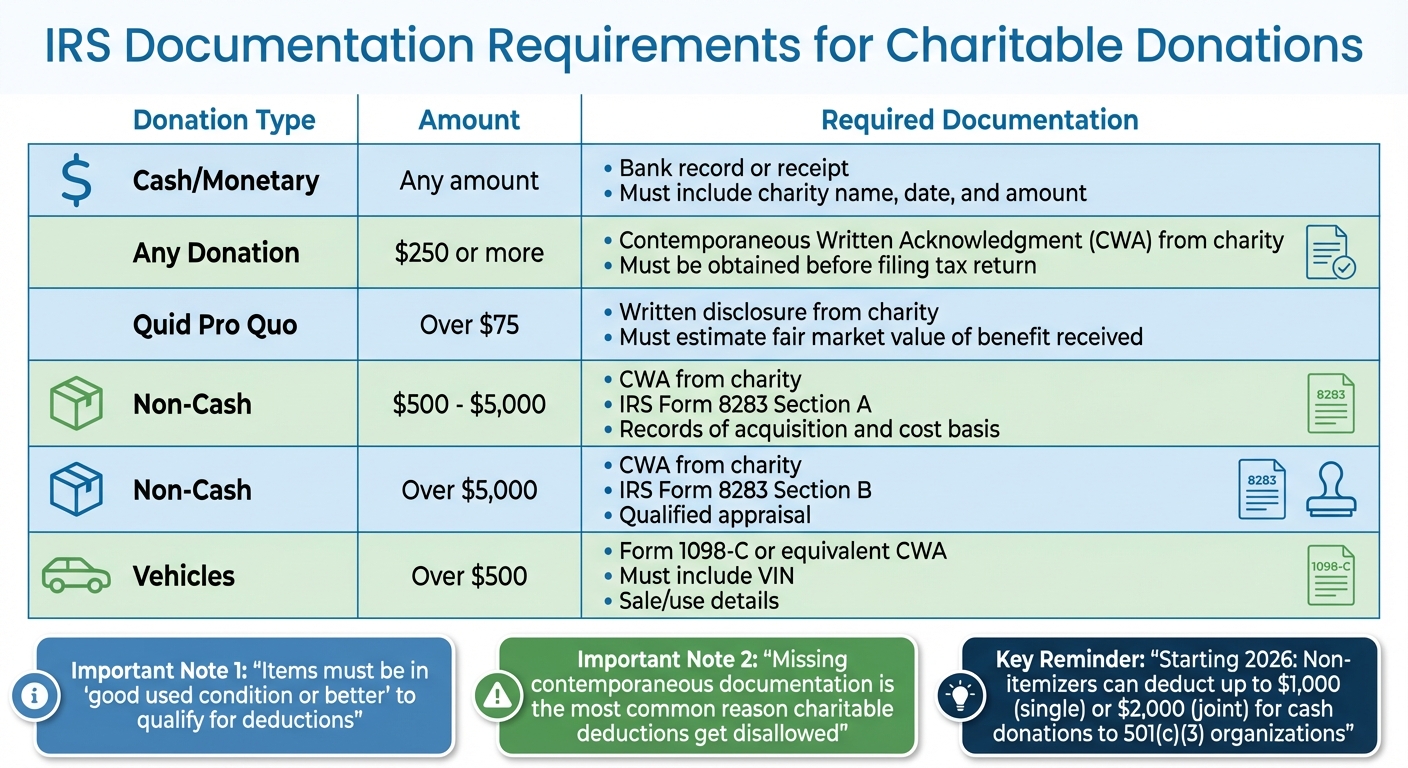
IRS Documentation Requirements for Charitable Donations by Amount and Type
Once you've confirmed a charity's legitimacy and tax-exempt status, your next step is keeping precise records of your donations. Without proper documentation, the IRS could reject your deductions. The responsibility to prove your claims falls entirely on you, so knowing what to track and how to organize it is essential for maximizing your tax benefits.
IRS Documentation Requirements for Donations
The IRS has clear rules about the paperwork needed to claim deductions, and these vary depending on the amount and type of donation. For any monetary contribution, you must keep a bank record or a written receipt that includes the charity's name, the date, and the donation amount [1]. This applies to all amounts, no matter how small.
For donations of $250 or more, the rules tighten. You’ll need a Contemporaneous Written Acknowledgment (CWA) from the charity. This document must be in your possession before you file your tax return or the due date (including extensions) [1]. A simple bank statement won't meet the requirements for these larger contributions.
"A simple bank statement or a canceled check just won't cut it anymore [for donations of $250 or more]." - DeductAble [30]
When it comes to non-cash donations, the requirements depend on the value:
- For items valued between $500 and $5,000, you’ll need IRS Form 8283, Section A, along with records showing how and when you acquired the property and its cost basis [28].
- For items worth more than $5,000, a qualified appraisal is typically required, along with Form 8283, Section B [28].
- If you donate a vehicle valued over $500, you’ll need a CWA (often Form 1098-C) that includes the Vehicle Identification Number (VIN) and details about how the charity used or sold the vehicle [27].
Additionally, the quid pro quo rule applies when you donate over $75 and receive goods or services in return, such as a ticket to a charity dinner. In these cases, the charity must provide a written disclosure estimating the fair market value of what you received [1][2]. Only the amount exceeding the value of the benefit is deductible.
Here’s a quick breakdown of what’s required for different types of donations:
| Donation Type | Amount | Required Documentation |
|---|---|---|
| Cash/Monetary | Any amount | Bank record or receipt with charity name, date, and amount. |
| Any Donation | $250 or more | CWA from the charity. |
| Quid Pro Quo | Over $75 | Written disclosure from the charity estimating the value of the benefit received. |
| Non-Cash | $500 - $5,000 | CWA, IRS Form 8283 Section A, and records of acquisition and cost basis. |
| Non-Cash | Over $5,000 | CWA, Form 8283 Section B, and a qualified appraisal. |
| Vehicles | Over $500 | Form 1098-C or equivalent CWA with VIN and sale/use details. |
To meet IRS standards, donated items must be in "good used condition or better" to qualify for deductions. Overvaluing non-cash items is a common red flag for audits [3][28]. The fair market value should reflect what a buyer would pay in the current used market - not the original purchase price [28][29].
"Missing contemporaneous documentation is the most common reason charitable deductions get disallowed." - Charity Record [28]
How Deductible.me Helps Track Donations
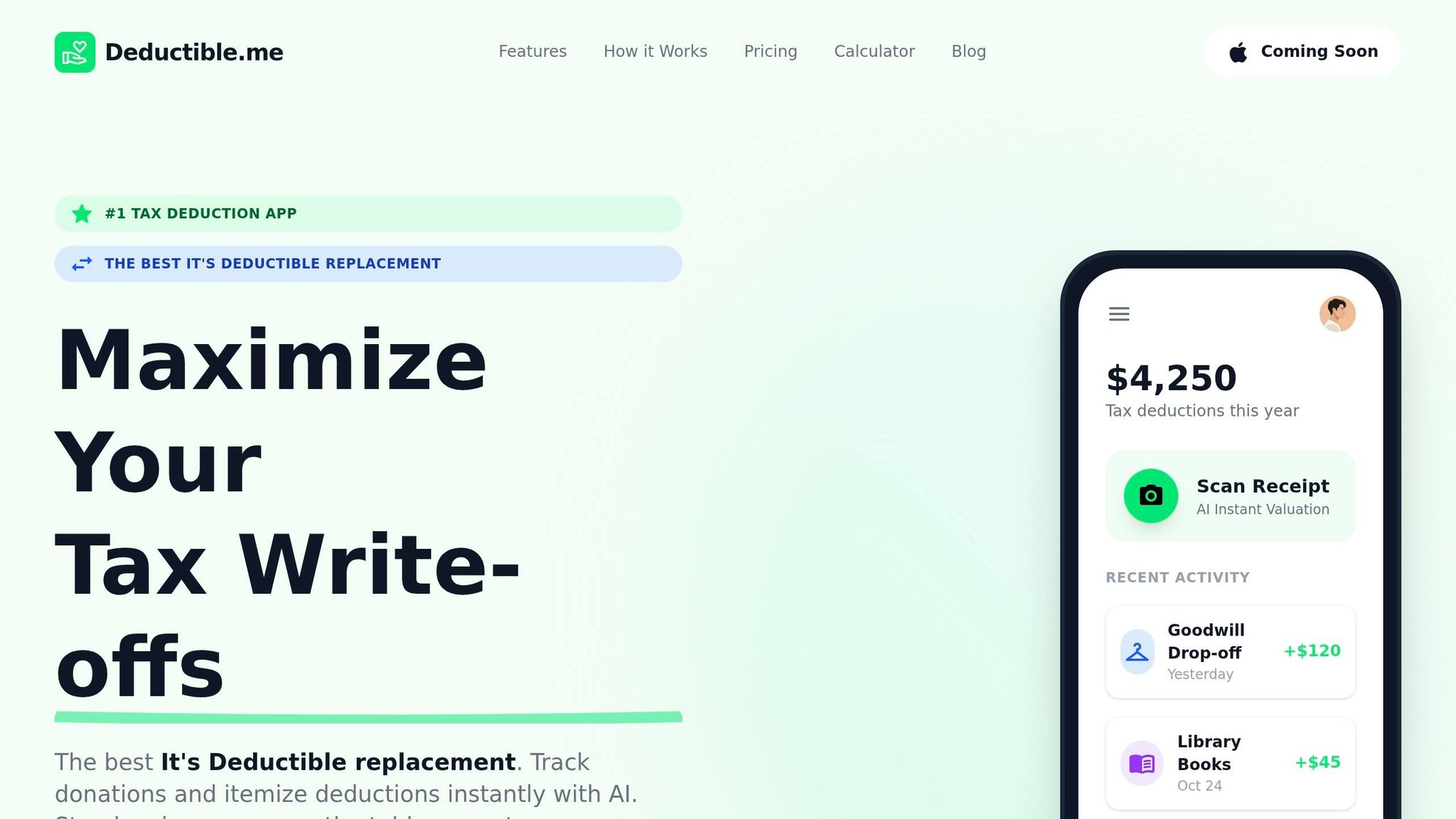
Keeping up with these requirements can feel overwhelming, but digital tools can make it easier. Deductible.me simplifies the process, offering an efficient way to track and organize your donations to meet IRS standards.
The app’s AI-powered valuation feature automatically calculates fair market values for donated items like clothing or household goods, based on their condition. This removes the guesswork of estimating values for items like a used couch or a winter coat. Plus, the photo capture tool lets you snap timestamped pictures of items before donating, creating visual proof of their condition in case of an audit [30].
Deductible.me also acts as a digital receipt hub, allowing you to upload photos of paper receipts, store PDF confirmations, and link them directly to specific donations [30]. This keeps all your records organized in one place, covering every detail the IRS requires - from the charity’s name to quid pro quo statements.
At the end of the year, the app generates detailed, itemized reports summarizing all your contributions. These reports are formatted to comply with IRS rules and make it easier to complete Form 8283 for non-cash donations exceeding $500 [30][31].
"DeductAble ensures every contribution is logged with the right details from the get-go, building a solid foundation for your tax filings and helping you maximize your itemized deductions." - DeductAble [30]
With a free plan that tracks up to $500 in donations and a Premium plan costing just $2/month, Deductible.me offers an affordable way to stay organized. Whether you donate occasionally or frequently, this tool can save you time, reduce stress, and help you get the most out of your deductions.
Conclusion
Before making a donation, it's essential to verify the nonprofit's tax-exempt status to ensure your contribution qualifies for a tax deduction. The IRS Tax Exempt Organization Search (TEOS) tool is a reliable way to confirm that an organization holds valid 501(c)(3) status and hasn't had its exemption revoked [6]. For accurate results, search using the charity's Employer Identification Number (EIN) rather than relying solely on its name [6]. This simple step protects you from fraud and ensures your donation is eligible for tax benefits.
Organized documentation is equally important when claiming deductions. Even small cash donations require proof, such as a bank record or a receipt that includes the charity's name, the date, and the amount of the donation [8].
To make the process even easier, digital tools can help. Platforms like Deductible.me not only assist with verification but also automate donation tracking to maintain IRS compliance. This app offers features like AI-powered valuations for donated items and generates IRS-compliant reports. Whether you're a casual donor using the free plan (up to $500 in tracked donations) or a frequent giver opting for the Premium plan at just $2/month, the app keeps everything organized and ready for tax season.
Starting in tax year 2026, even if you don't itemize deductions, you'll be able to deduct up to $1,000 in cash contributions (or $2,000 for joint filers) [6][8]. With these expanded tax benefits on the horizon, it’s a great time to develop habits like verifying nonprofits, keeping thorough records, and leveraging tools that simplify compliance to maximize your savings.
FAQs
What should I do if a charity doesn’t show up in the IRS TEOS search?
If a charity doesn’t appear in the IRS TEOS search, you can still verify its tax-exempt status through other means. Start by reaching out to the organization directly and asking for their IRS determination letter or a copy of their Form 990. Additionally, you can refer to IRS resources like Publication 557 for further guidance. Taking these steps ensures your donation qualifies as tax-deductible and is acknowledged by the IRS.
How can I tell if a donation is actually tax-deductible before I give?
To determine if a donation is tax-deductible, check that the organization is officially recognized by the IRS, such as those classified under 501(c)(3) status. For contributions of $250 or more, make sure to get a written acknowledgment from the organization. It's also essential to keep proper records, like receipts, and use IRS tools to verify the organization’s eligibility. Following these steps ensures your donation meets IRS requirements for tax deductions.
What records do I need to keep so the IRS won’t deny my deduction?
To make sure your deductions pass muster with the IRS, it's crucial to have the right documentation for your charitable donations.
- For donations of $250 or more: Hold onto a written acknowledgment from the charity. This should state the amount donated and describe any goods or services you received in return, if applicable.
- For donations under $250: A bank statement, canceled check, or receipt from the charity will typically do the job.
- For non-cash donations: Keep detailed records. This includes receipts from the organization, photos of the donated items, and a clear inventory. If the value of your non-cash donation exceeds $500, you'll also need to complete IRS Form 8283.
Having these records ready helps ensure your deductions are accurate and acceptable.